
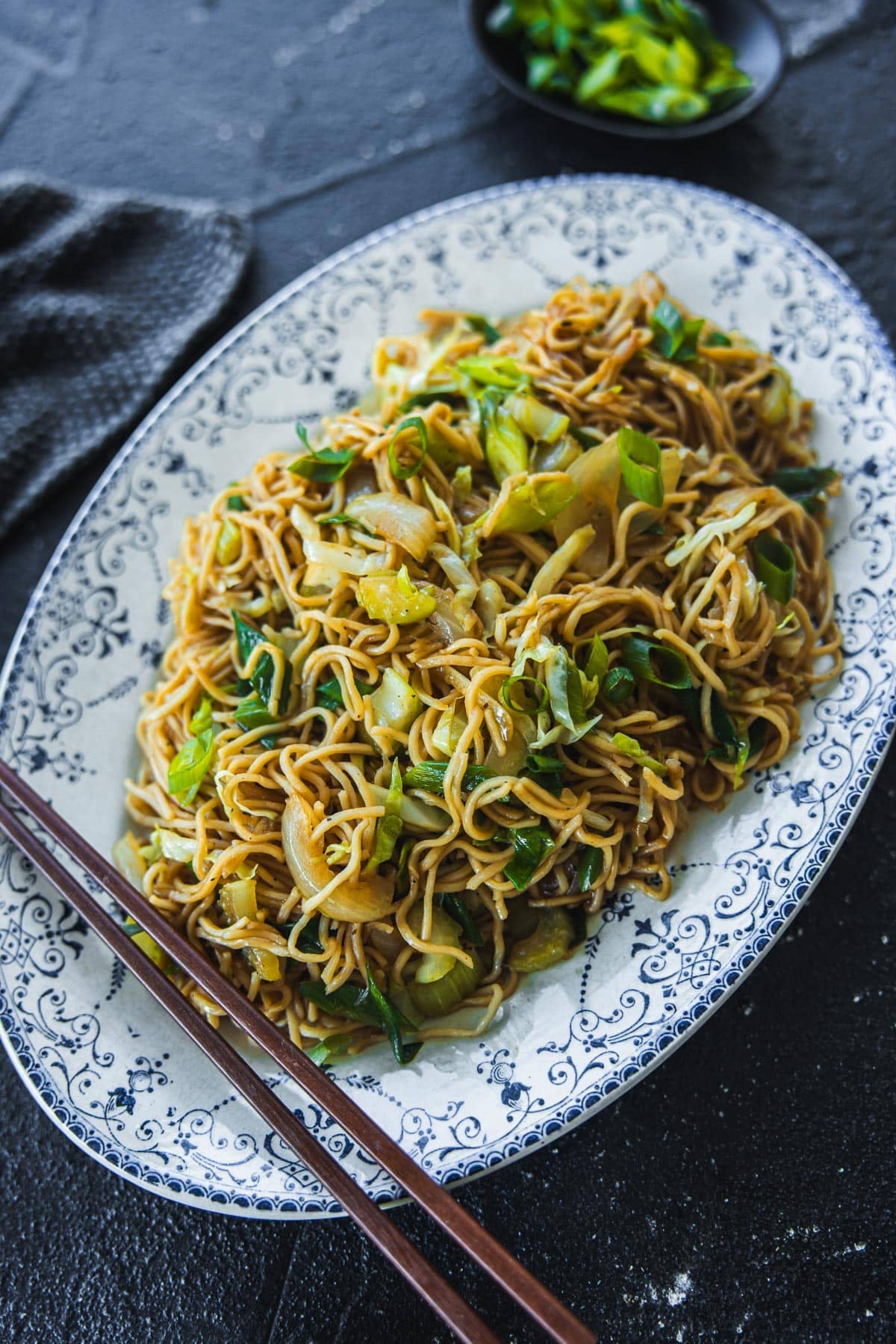
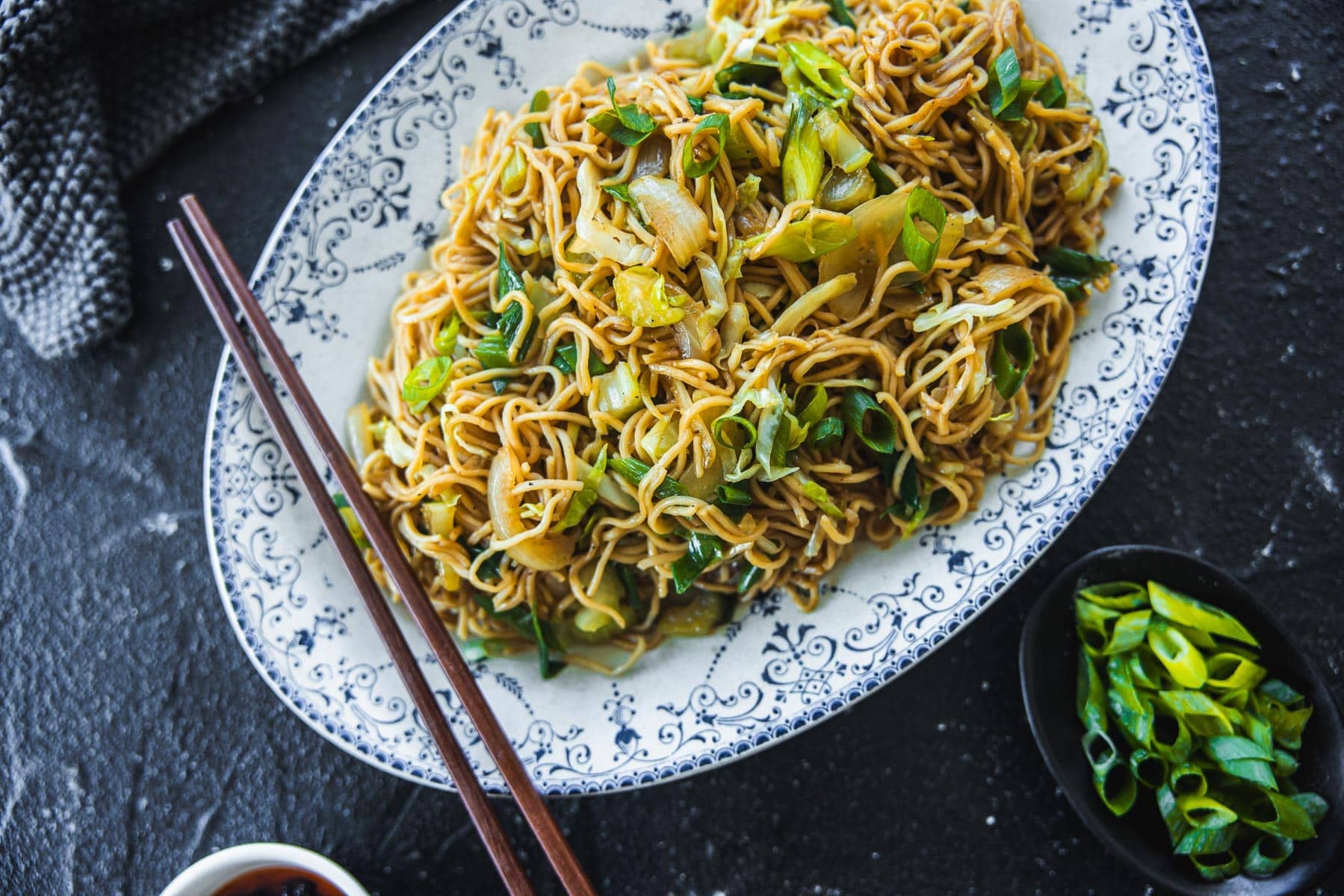
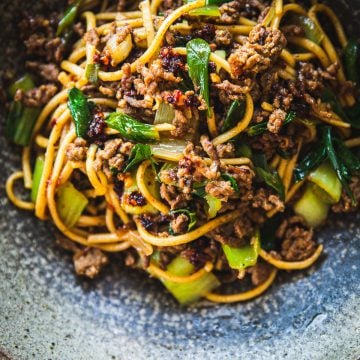
Panda Express Chow Mein is a popular stir-fried noodle dish made with chewy wheat noodles, cabbage, celery, onion, spring onion and aromatics tossed in a hot wok with delicious Asian sauces. It is smoky, full of flavour, easy to make in minutes and becomes a perfect accompaniment to Asian dishes like Chinese Satay Chicken or Chinese Cashew Chicken.
Jump to:
🥡 What is Panda Express Chowmein?
Panda Express is an American fast-food restaurant chain that specialises in American Chinese food. Some of their most popular dishes include Orange Chicken, Super Greens, Beijing Beef, Kung Pao Chicken and of course, the Panda Express Chow Mein. A wildly popular stir-fried noodle dish made with wheta noodles, onion, celery, cabbage, ginger, garlic and sauces. A homemade version tastes just like the real deal (perhaps better!) and you will absolutely love it for the following reasons
- Makes the ideal accompaniment for all your Asian stir-fried dishes
- Super easy, quick and one-wok dish
- Packed with vegetables
- Can be made ahead
- Freezes and travels well
- Perfect meal prep noodle dish
🥬 Ingredients & Substitutions
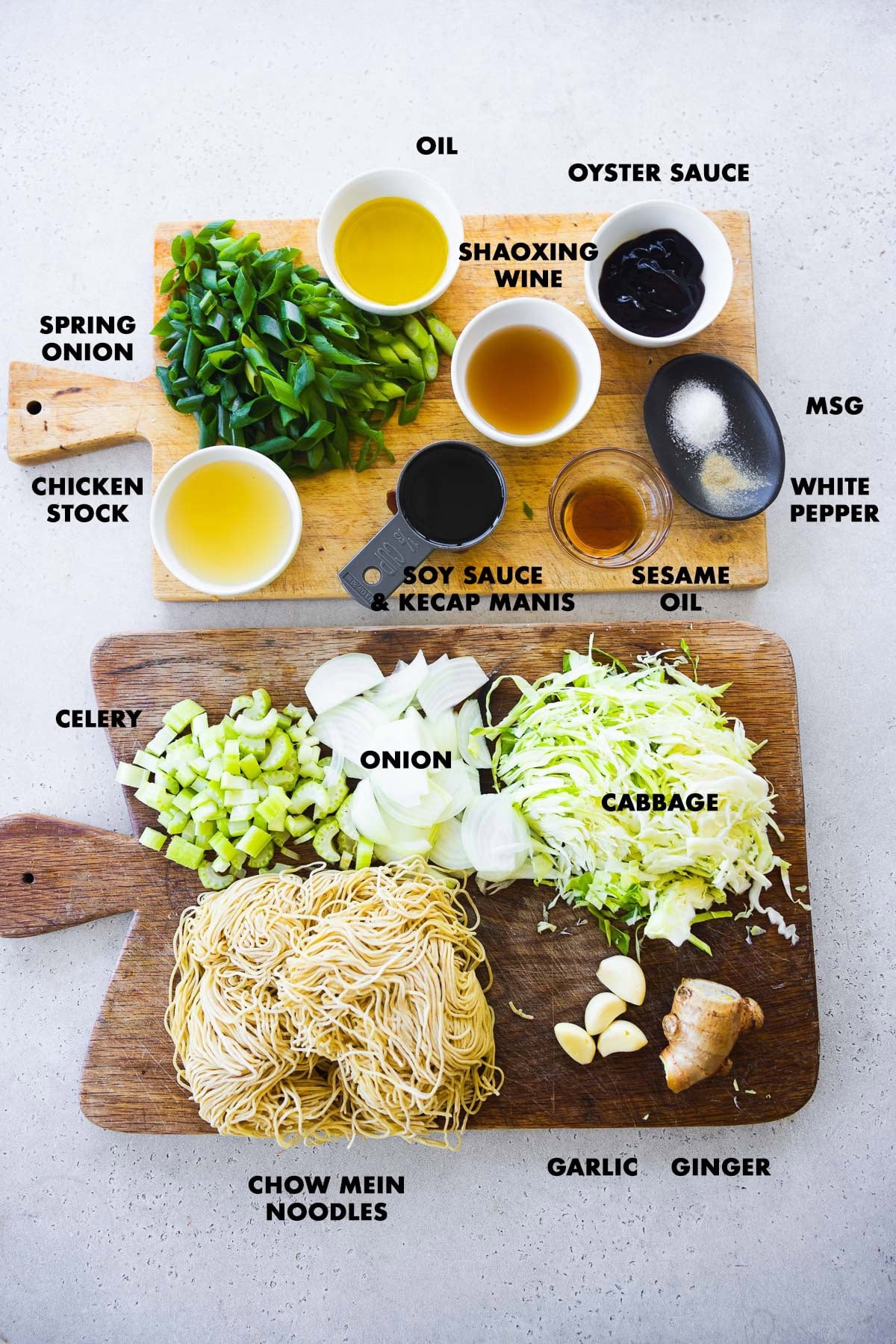
- Noodles - I use fresh chow mein wheat noodles. They only need 1-2 minutes in boiling water to cook completely. Other viable options include fresh egg noodles and fresh yaki soba noodles. You need thinner noodles for this Panda Express chow mein.
- Vegetables - The original Panda Express Chow Mein recipe has onion, celery, cabbage and spring onion. These vegetables provide texture, crunch and a bit of sweetness to the stir-fried noodles. You can add vegetables such as green capsicum, snow peas, or Asian greens to bulk up the green vegetable component of this dish.
- Ginger and Garlic - I use fresh. You can substitute with paste.
- Sauces - The sauce is savoury and sweet, comprising soy sauce, sweet dark soy sauce (kecap manis), oyster sauce and Shaoxing wine. Oyster sauce can be replaced with vegetarian oyster sauce to keep this dish strictly vegetarian.
- Oils - A neutral oil like peanut or grapeseed is used for the base stir-fry, whereas sesame oil is added to the sauce for a delicious Asian flavour.
- MSG - Monosodium Glutamate is a flavour enhancer and makes this Panda Express Chow Mein taste like the authentic restaurant version. You can skip this altogether or substitute with vegetable stock powder.
- Chicken Stock and white pepper
🔥 How to make Panda Express Chowmein?
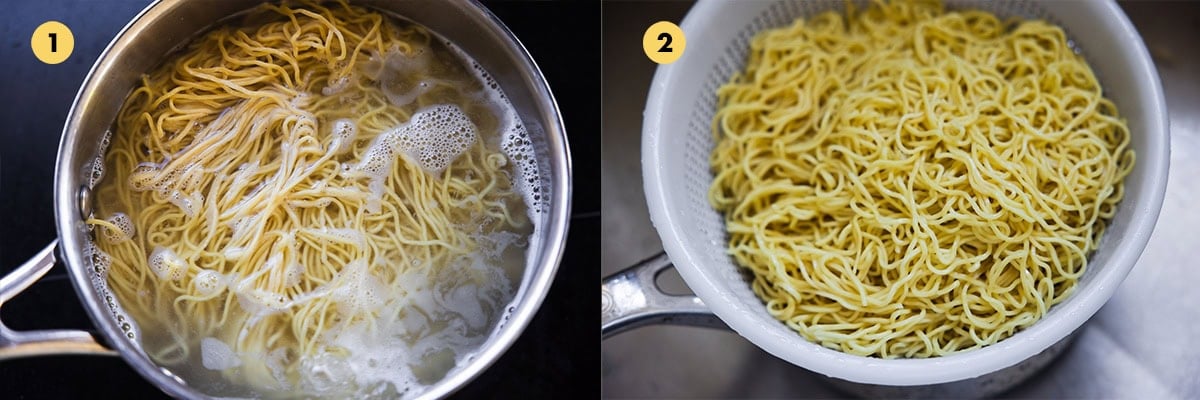
- Cook Chow Mein Noodles in boiling water for a couple of minutes.
- Drain, refresh with cold water, drain completely and set aside.
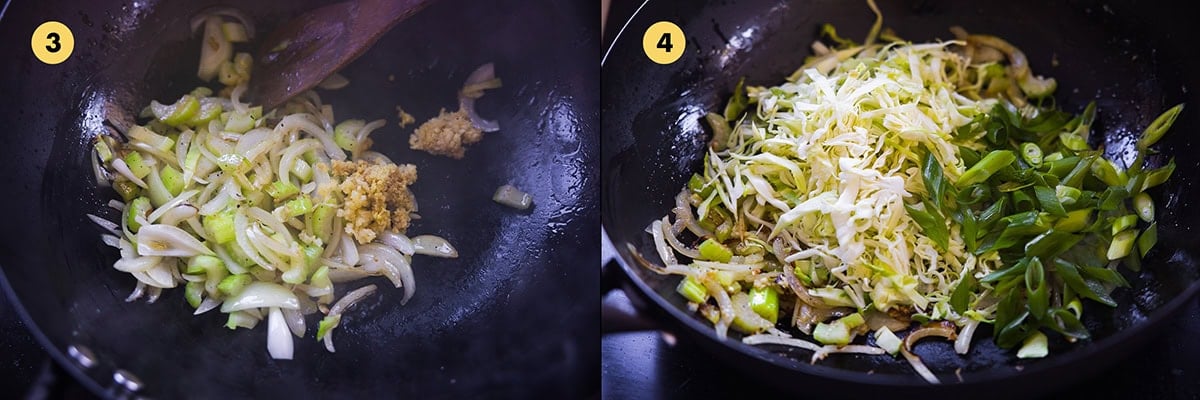
3. Stir-fry the onion and aromatics in oil in a wok on high heat.
4. Add celery, cabbage and half the spring onion and stir-fry.
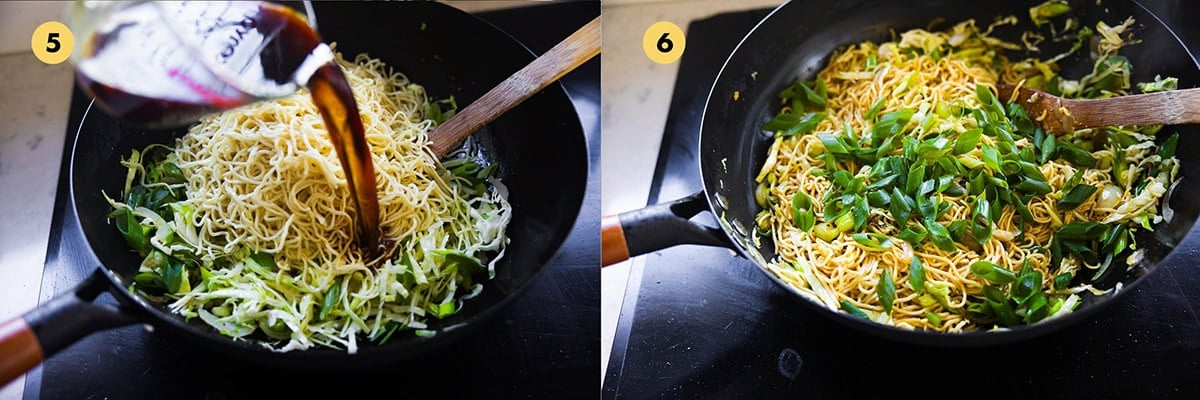
5. Add cooked chow mein noodles and sauce. Stir-fry for a couple of minutes.
6. Add the remaining spring onion, toss and serve hot.
🥢 Storage & Serving Suggestions
Panda Express Chow Mein Noodles will stay fresh in the fridge for up to two days. They can also be frozen in freezer-safe containers for up to two weeks. Simply thaw on the counter at room temperature for a few hours or in the microwave to eat.
Serve these noodles as part of a larger Asian banquet meal with Sticky Marmalade Chicken Wings, Smashed Cucumber Salad, Chinese Chilli Eggplant and Mushroom Ma Po Tofu.
🍜 More Noodle Recipes
Recipe
Hungry For More Recipes? Subscribe to my FREE weekly cooking newsletter. Check out Instagram, Facebook, and Tiktok to see everything I share! And if you love exploring cooking techniques, discovering new cookbooks and want access to my exclusive veg-forward recipes, join my Best-Selling Substack!
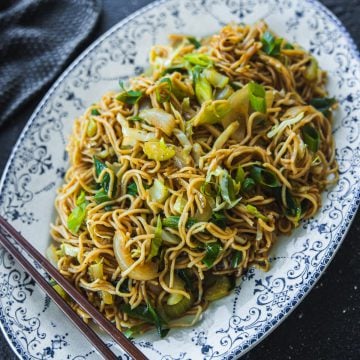
Panda Express Chow mein
Ingredients
- 300 g fresh chow mein noodles
- 1/3 cup soy sauce
- 2 tbsp Shao xing wine
- 2 tbsp oyster sauce
- 1 tsp kecap manis
- ¼ cup chicken stock
- 2 tsp sesame oil
- ½ tsp MSG
- ¼ tsp white pepper
- 2 tbsp oil
- 1 brown onion, sliced
- 4 garlic cloves, minced
- 2 tsp grated ginger
- 1 celery, chopped
- 2 cups shredded cabbage
- ½ cup sliced spring onion
Instructions
- Cook chow mein noodles in water as per packet instructions. Drain, refresh with cold water, drain completely and set aside.
- Make the chow mein sauce by mixing soy sauce, Shao xing wine, oyster sauce, kecap manis, chicken stock, sesame oil, MSG and white pepper in a bowl.
- Heat oil in a wok on high. Add onion and saute for a couple of minutes until starting to soften. Add garlic, ginger and celery. Stir-fry for a minute until aromatics are fragrant. Add cabbage and stir-fry for 2 minutes.
- Add cooked noodles, chow mein sauce and half the spring onion. Toss and stir-fry for 2 minutes until heated through. Remove from heat, garnish with remaining spring onions and serve.
Notes
- Noodles - I use fresh chow mein wheat noodles. They only need 1-2 minutes in boiling water to cook completely. Other viable options include fresh egg noodles and fresh yaki soba noodles. If using dried noodles, try yakisoba, ramen or thin egg noodles and cook as per packet instructions. You need thinner noodles for this Panda Express chow mein.
- Vegetables - The original Panda Express Chow Mein recipe has onion, celery, cabbage and spring onion. These vegetables provide texture, crunch and a bit of sweetness to the stir-fried noodles. You can add vegetables such as green capsicum, snow peas, or Asian greens to bulk up the green vegetable component of this dish.
- Ginger and Garlic - I use fresh. You can substitute with paste.
- Sauces - The sauce is savoury and sweet, comprising soy sauce, sweet dark soy sauce (kecap manis), oyster sauce and Shaoxing wine. Oyster sauce can be replaced with vegetarian oyster sauce to keep this dish strictly vegetarian.
- Oils - A neutral oil like peanut or grapeseed is used for the base stir-fry, whereas sesame oil is added to the sauce for a delicious Asian flavour.
- MSG - Monosodium Glutamate is a flavour enhancer and makes this Panda Express Chow Mein taste like the authentic restaurant version. You can skip this altogether or substitute with vegetable stock powder.
- Chicken Stock and white pepper - Substitute chicken stock with vegetable stock and white pepper with black pepper.







0 Comments