
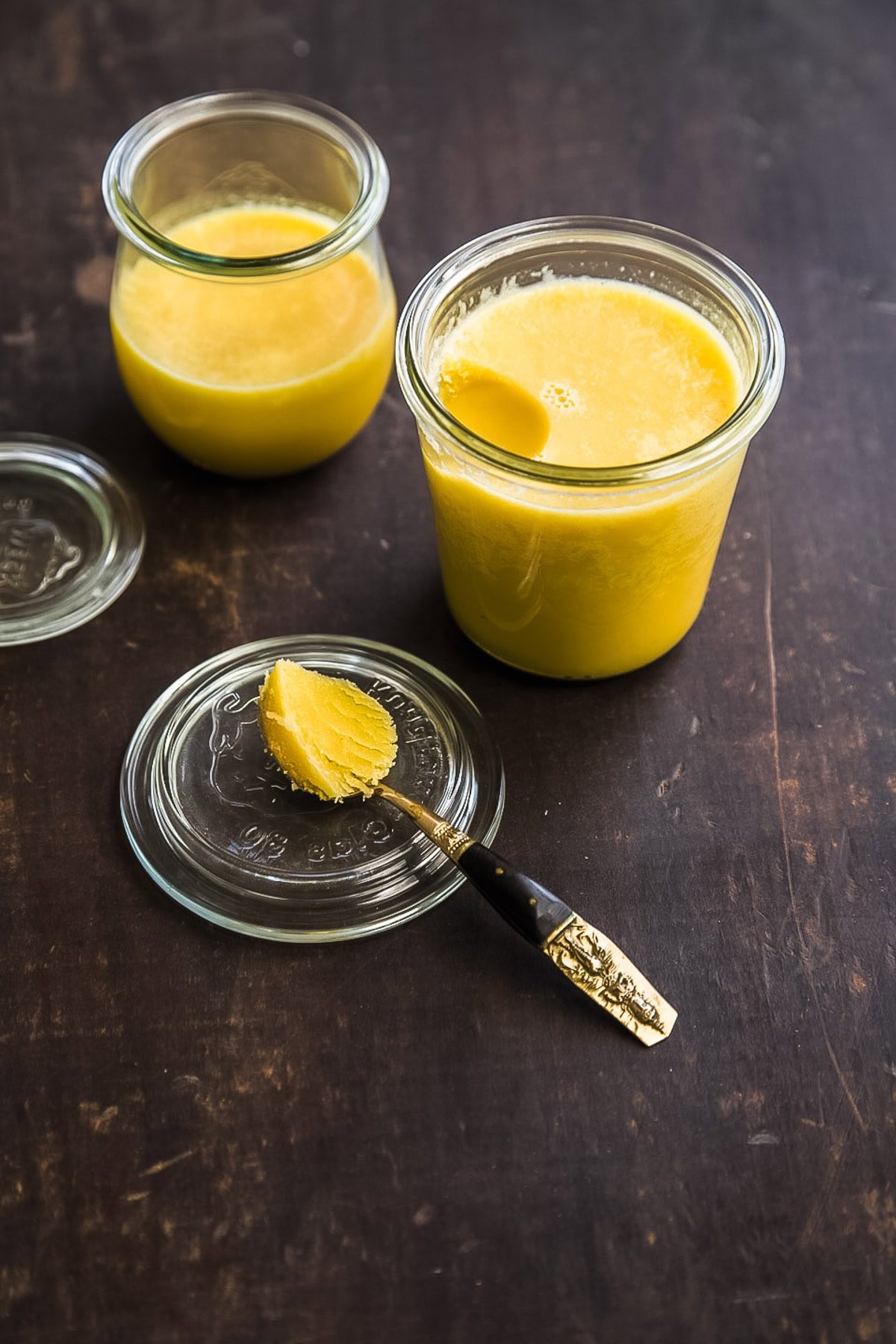
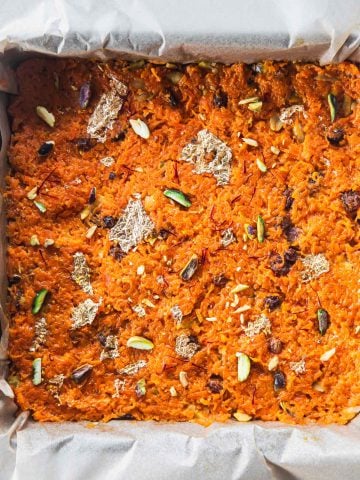
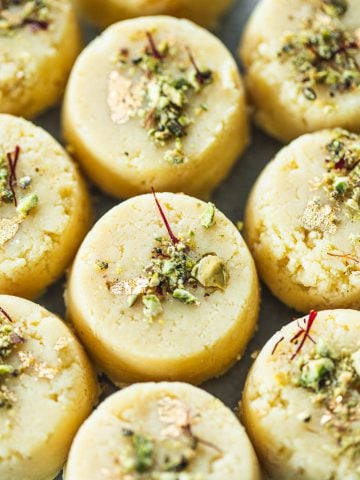
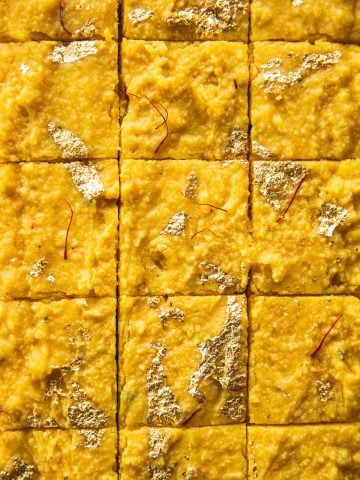
Let me show you how to make ghee in just one pot at home using a slab of butter. My easy, trusty, 80-year old family recipe will have you making ghee in just 30 minutes. Use this delicious, golden liquid in all traditional Indian sweet recipes like Naankhatai, Gajar Ka Halwa and Malai Peda.
Jump to:
The Story Of Homemade Ghee
I was lucky enough to be involved in many an artisan process since early childhood. Of all the artisanal things mum practised in the kitchen, my favourite was the art of making butter. I wasn't taught. I was brainwashed from watching mum go through her rituals every single day. Education via osmosis. It was like living in a churnery where fresh cream was religiously skimmed off the top of boiled milk and collected in an earthen pot. When it started fermenting gently, a slight sour aroma would waft from the pot. It was then that it was churned with a long wooden-handled churner by gently rolling between the palms of her hands (something I do in my Kitchenaid stand mixer now). The luscious, fluffy white butter would separate from the whey. And it is this butter that I would lap up with bread, flatbreads and everything in between. It was unsalted, cold, creamy and had a slight sour tang. I loved it.
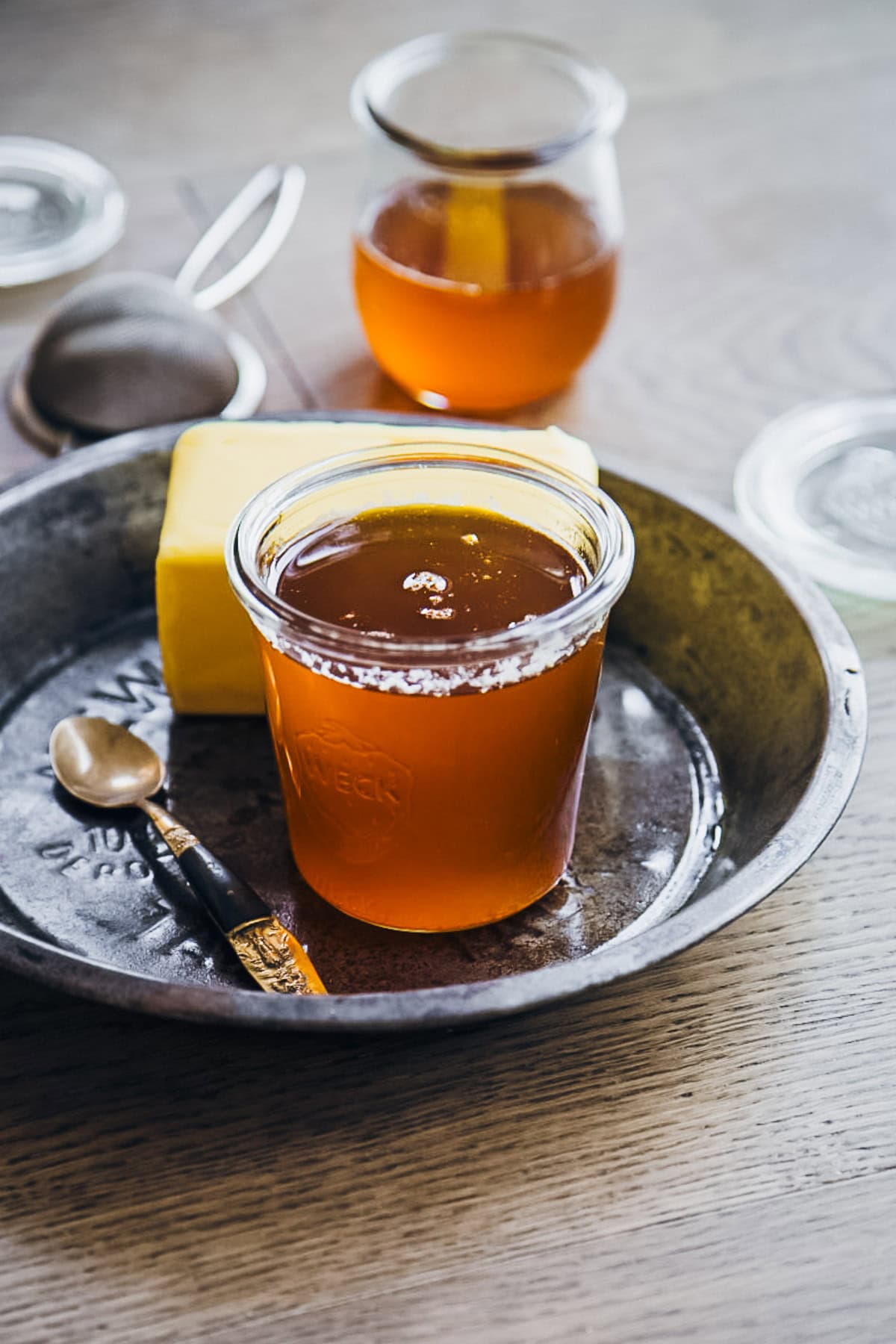
Once a month, mum would deny me my addiction and simmer half a pot of home-churned butter till it filled the house with a rich caramel aroma. We had a special pot for it that was burned, scuffed and marked with years of ghee-making. With every batch of butter cooked, the bottom of the pot would resemble a coral reef with porous beehive-shaped brown solid formations, while the clear liquid gold floated to the top. This was collected in glass jars and used for cooking. Homemade ghee. Clarified butter. That special something which gives Indian dishes their authentic flavour.
How To Make Ghee
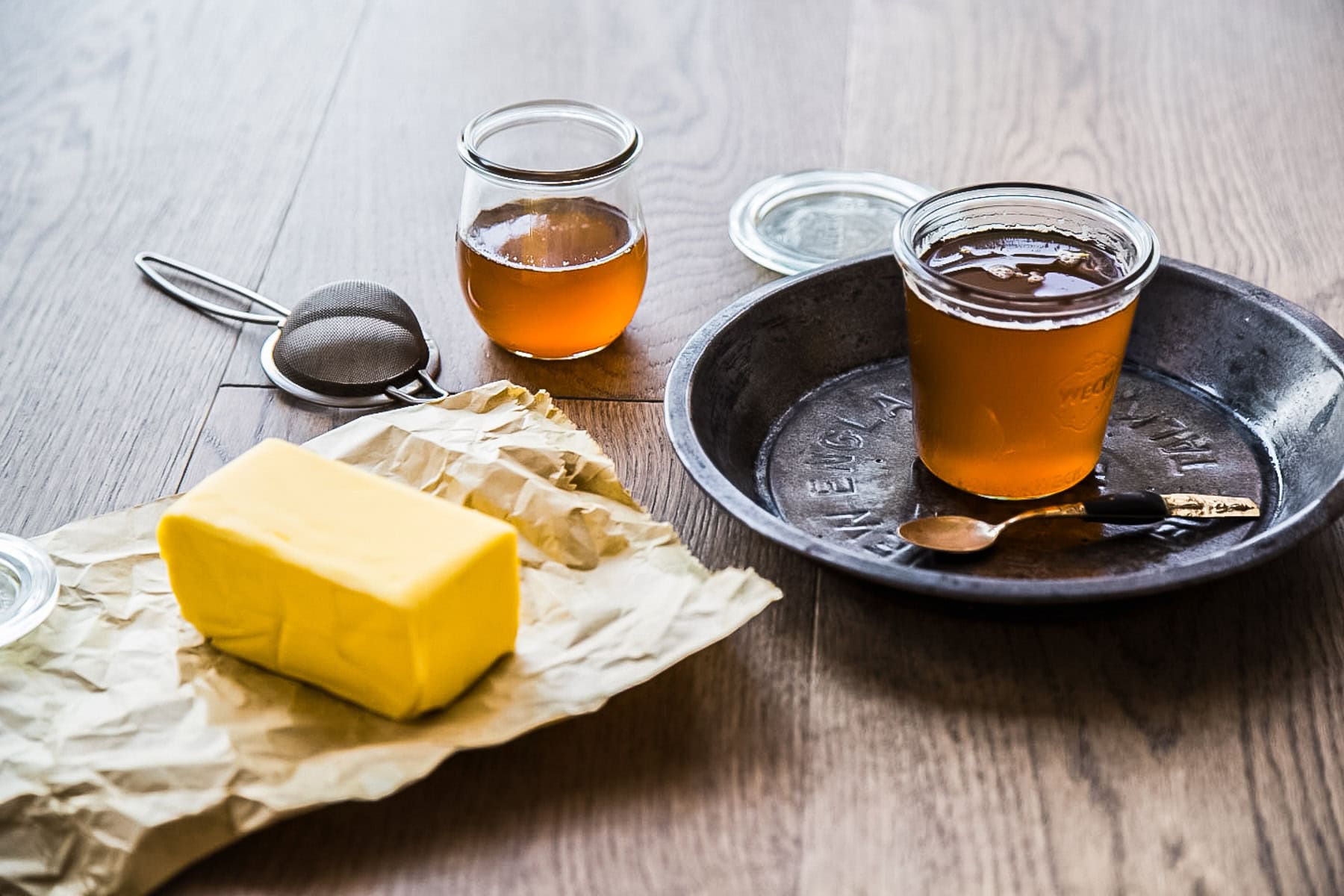
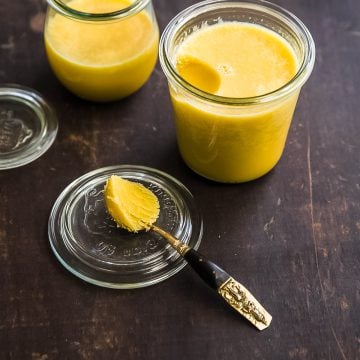
Making ghee is ridiculously simple. You only need good-quality butter. Homemade butter is even better, and all you need to make that is some good-quality cream. You basically start by simmering butter in a heavy-bottomed pan, occasionally skimming the foamy bits that float to the surface. After about half an hour, your ghee in liquid form will be clear and the colour of caramel. You strain this liquid into a glass jar and let it cool. Once cooled, it becomes much lighter and golden. It also becomes solid. And this is how to make ghee.
Benefits of Ghee
Ghee is one of my favourite fats to cook with. It tastes warm, nutty and like caramelised butter. Ayurveda considers ghee the best fat you can eat, enriching the body and increasing longevity. It is lactose-free despite being made with butter and has a rich, divine, nutty aroma. It is made of shorter-chain fatty acids, which are better absorbed by the body and keep the joints lubricated, thereby reducing arthritis-related ailments. You can make a jar full as and when you need it and store it in a cool corner of your pantry.
More Traditional Indian Recipes
Recipe
Subscribe to my FREE weekly cooking newsletter. Check out Instagram, Facebook, and Tiktok to see everything I share! And if you love exploring cooking techniques, discovering new cookbooks and want access to my 150+ exclusive recipes and weekly meal plans, join my Substack Hungry & Curious!
Come to my Cooking School in Sydney and learn the art of cooking through hands-on Cooking Classes & Workshops!
Ingredients
- 500 g unsalted butter
Instructions
- Place butter in a medium heavy bottomed saucepan on medium heat.
- Simmer till butter is melted. Reduce heat to low and give the melted butter a stir. Let it simmer slowly for 20-30 minutes ensuring that the heat is low enough for it to not start burning.
- Using a netted skimmer, skim the foamy bits off the top of the liquid (these are the milk solids separating from the liquid and burning off). Check from time to time (every 5 minutes) and skim the foam from the top.
- At the end of 30 minutes, you will have a reasonably clear golden liquid. You will see a solid brown (beehive patterned) residue at the bottom of the pan.
- Remove pan from heat. Cool for 10 minutes.
- Strain hot liquid carefully in a clean 500g capacity glass jar and allow it to cool completely before covering with a lid.
- Ghee will keep at room temperature, in a cool cornber of your kitchen for up to 3-4 weeks. For added frshness, store the jar in your fridge.








Sneh... you have brought so much joy & love into my kitchen...you so generously share your recipes... I have a chilli tree full of red & green Thai style chillies ...what would you suggest I do with them all...my friends all say... “I have enough chillies for now”!
I could send you a parcel if you would like
I had no idea how one actually made ghee. You put it in terms that I could totally understand. So excited to give it a try.
I've never cooked with ghee, but really enjoy the meals that my Indian friend cooks for me using it. I think she buys her ghee though, rather than making her own!
I didn't grow up knowing about ghee much less ever tasting it. It wasn't until I moved to Australia that I had my first opportunity and found I loved it. I've never made it but I'm going to now!
What a simple process! It's nice to have an option to get some proper ghee when making a curry and opening the fridge to find out that it's run out.
What a lovely childhood story! I've been meaning to make clarified butter for awhile now...I'll get to it some day!
Beautiful! I always wondered how this was made! I'll have to try it sometime.
Lovely! I'll have to make some very soon...
Cheers,
Rosa
Childhood memories! My mum used to make 'scrambled' mava with the leftover beehive - just add sliced onions, chopped tomatoes and green chilies, garam masala and salt. Cooks in a few minutes, delish with fresh rotis. Or the sweet version, which would make me heady! Sugar, crushed cardamom seeds and chopped nuts.
Sneh, you took me back to my childhood days. Ghee was always homemade and that beehive solid brown at the bottom of the pan was my abdolute favourite 🙂