
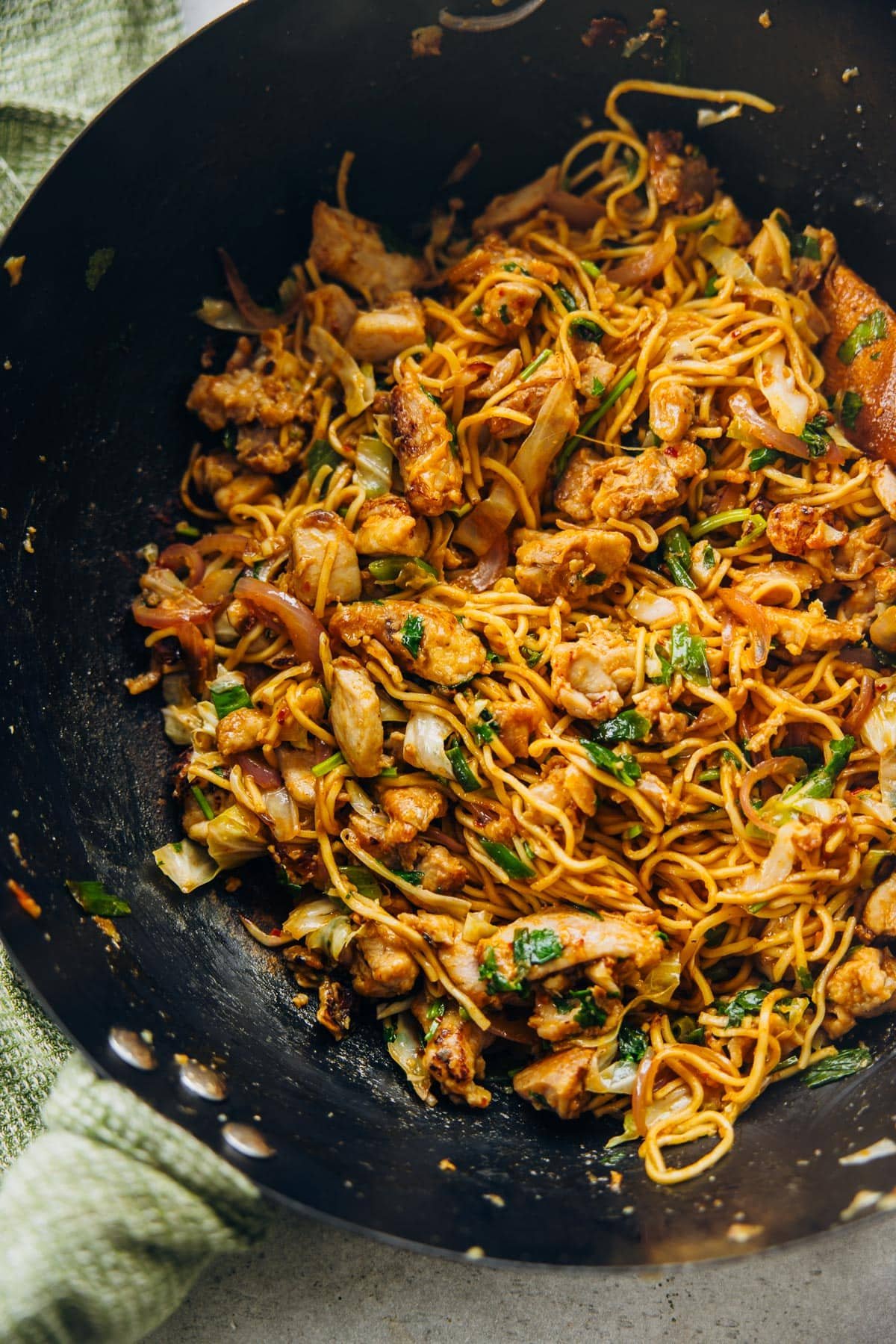
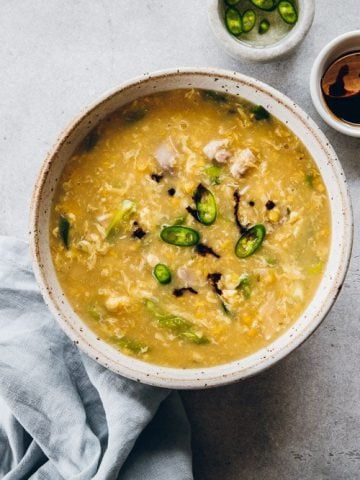
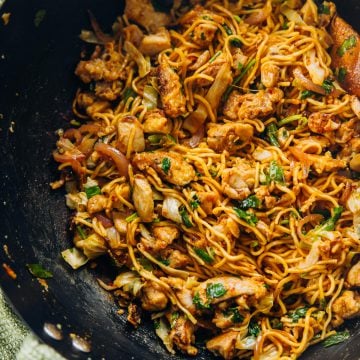
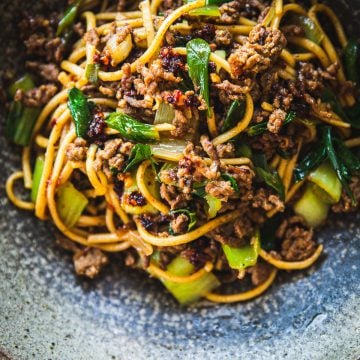
Chicken Schezwan Noodles are delicious Indo-Chinese stir-fried noodles made with a bold, fiery, sweet, spicy and tangy Schezwan sauce. Perfect on their own or with a delicious bowl of steaming Indo-Chinese Sweetcorn Chicken Soup.
Jump to:
🥢 What are Schezwan Noodles?
Schezwan noodles are a popular Indo-Chinese stir-fry, where noodles, vegetables, and protein are tossed in a fiery, tangy Schezwan sauce. These are not to be confused with Chinese Sichuan noodles, which rely on Sichuan peppercorns and have a complex salty, sour, bitter, and smoky flavour profile. Indo-Chinese Schezwan noodles were made popular on the streets of India by the Hakka community of eastern India, cleverly blending ingredients and flavours from two distinct cuisines - Indian and Chinese. Inspired by Sichuan cuisine but bolder and brighter, Schezwan noodles were spicy, slightly sweet, sour, and irresistibly tangy. The signature Schezwan sauce is typically made from dried red chillies, ginger, garlic, soy sauce, and tomato ketchup.
🥡 Why make my Chicken Schezwan Noodles?
- Quicker and healthier than takeout.
- Super delicious, easy one-wok dish.
- Great for meal-prepping. Cooked noodles will stay fresh in the fridge for up to three days.
- Can be made ahead and frozen.
- They reheat and travel well for packed lunches.
🧅 Ingredients And Substitutions
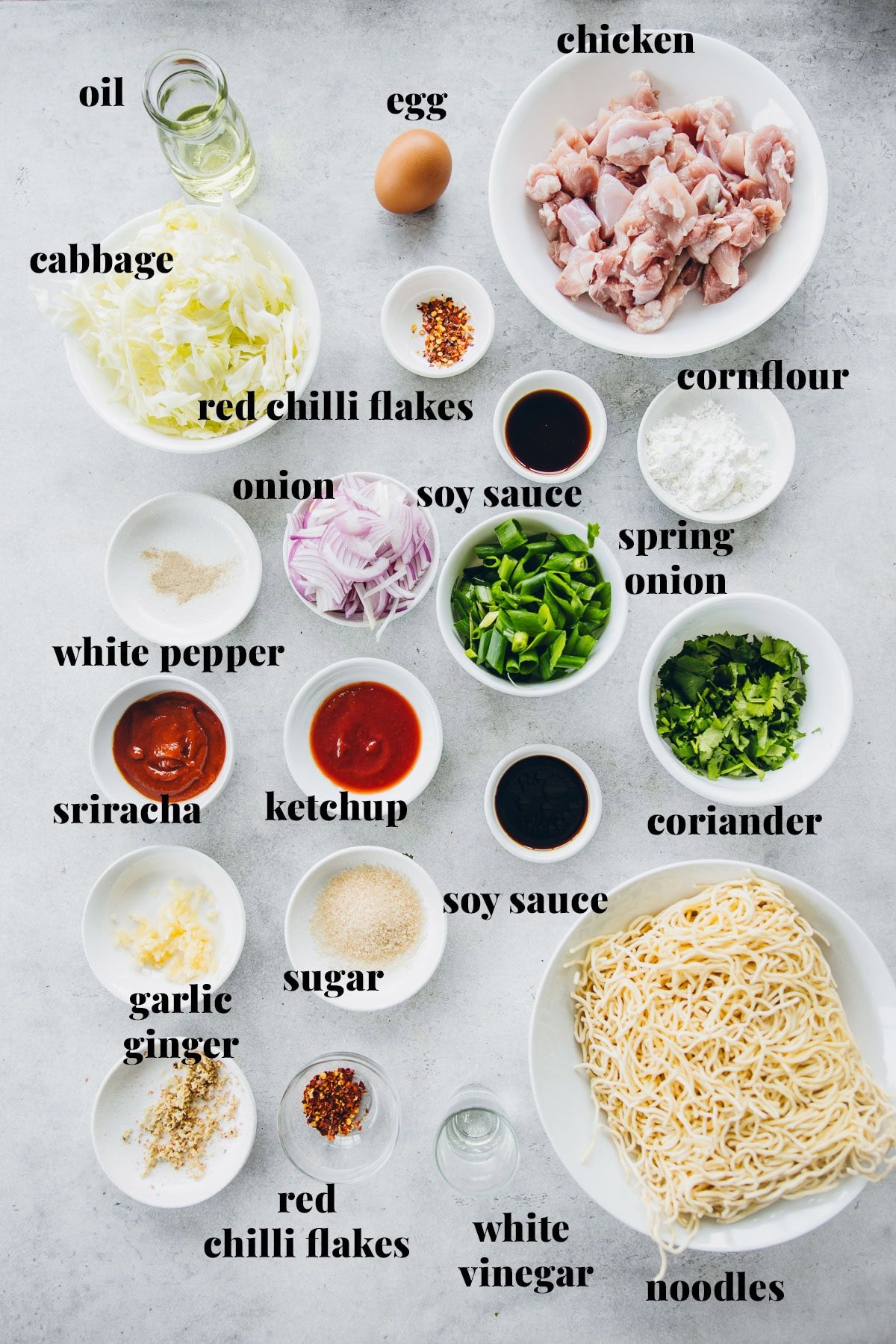
Chicken - Boneless, skinless chicken thigh works best in these Chicken Schezwan Noodles.
Noodles - Fresh chow mein noodles are perfect for this dish. Chow mein noodles are thinner than udon noodles and have a similar thickness to ramen or egg noodles. If using uncooked noodles, try plain Chinese instant noodles or thin egg noodles, which are available in Asian sections of supermarkets. Two 100g cakes would be the right amount for this recipe.
Soy sauce - Use light soy sauce for this dish.
Vinegar - White vinegar for the acidic tang. Indo-Chinese dishes often use white vinegar to add acidity. Do not substitute with rice wine vinegar as it changes the flavour profile.
Sriracha and Ketchup - Sriracha for heat and tomato ketchup for the tangy sweetness.
Aromatics - Fresh ginger and garlic
Vegetables - Red onion for the base, cabbage and spring onion for texture.
Herbs - Fresh coriander is a key ingredient of Indo-Chinese cuisine. Don't skip this herb for that true, authentic Indo-Chinese taste.
🔪 How to make Chicken Schewan Noodles?
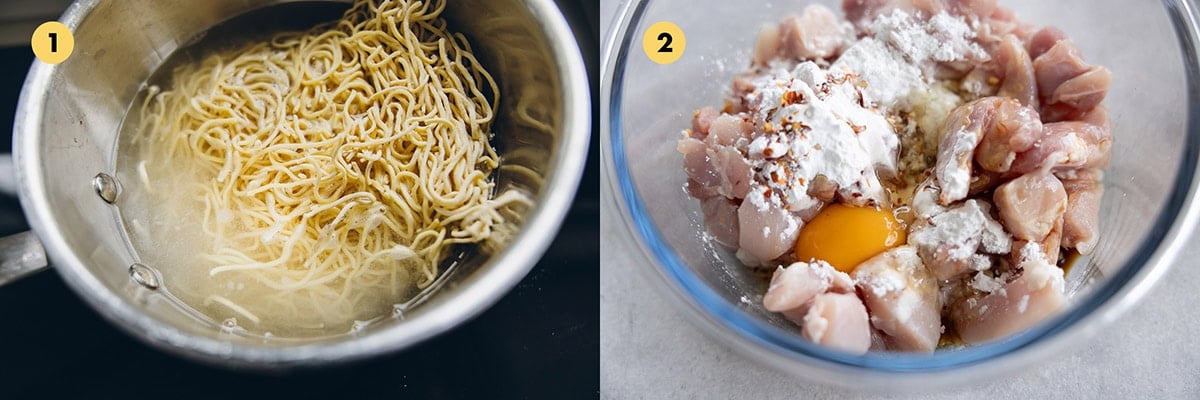
- Cook noodles as per packet instructions.
- Marinate the chicken with egg, soy sauce, cornstarch and chilli flakes.
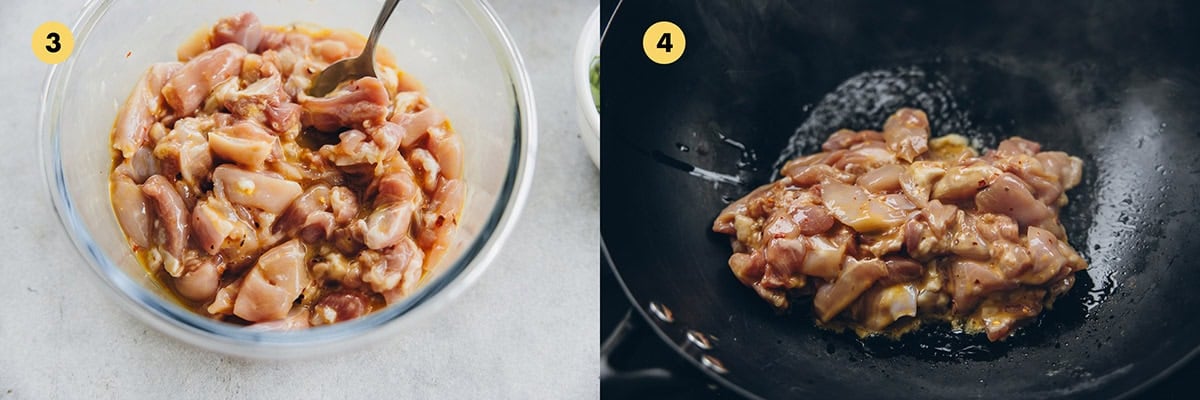
3. Mix the chicken with the marinade and allow it to rest.
4. Heat oil in a hot wok and add the chicken to the wok.
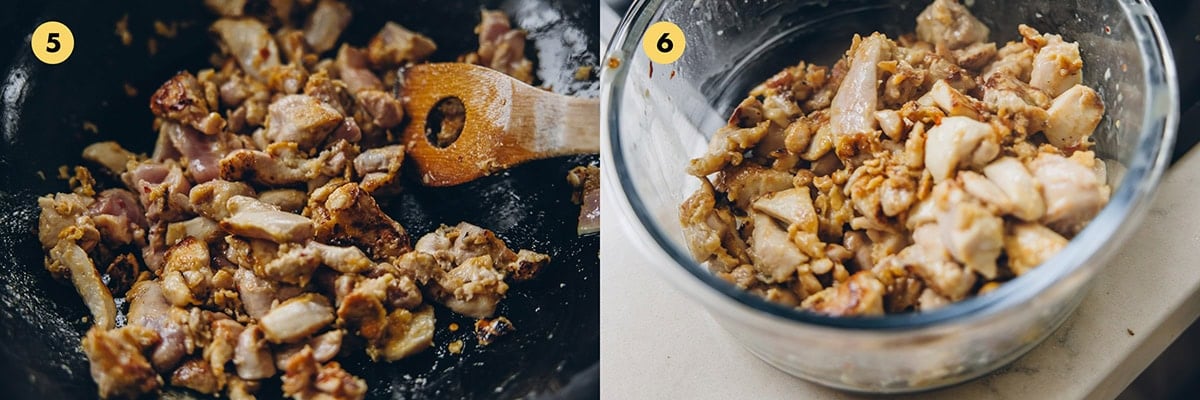
5. Stir and fry chicken on high heat until almost cooked through and golden.
6. Remove the chicken to a bowl.
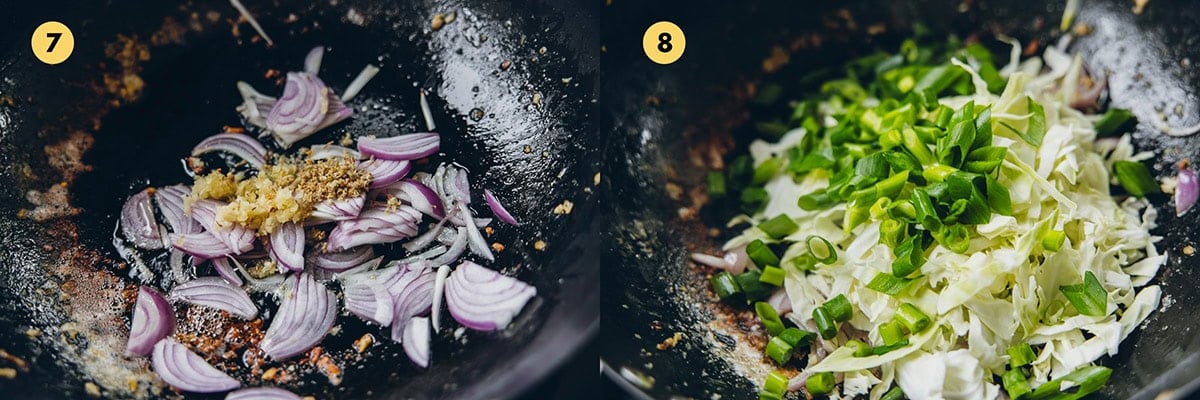
7. Stir-fry onion, ginger and garlic in oil in a hot wok.
8. Add cabbage and spring onion and stir-fry briefly.
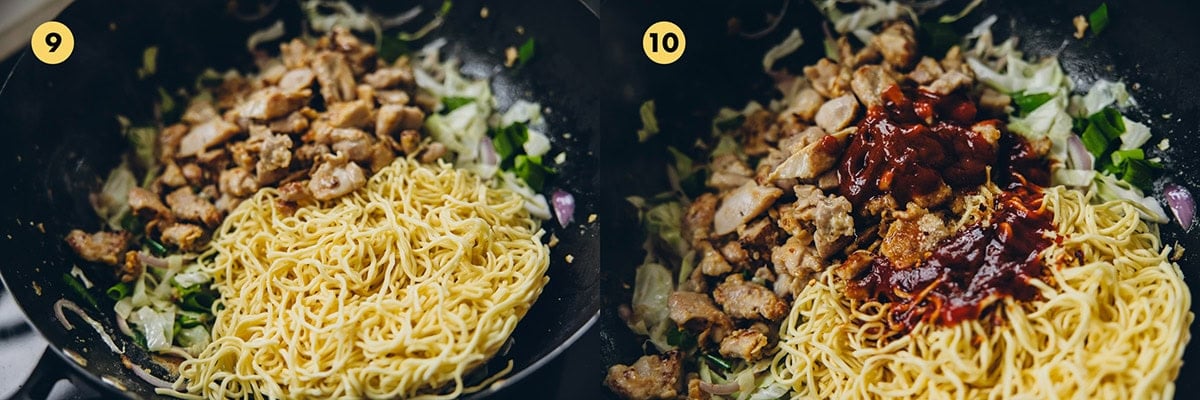
9. Add chicken and noodles to the wok.
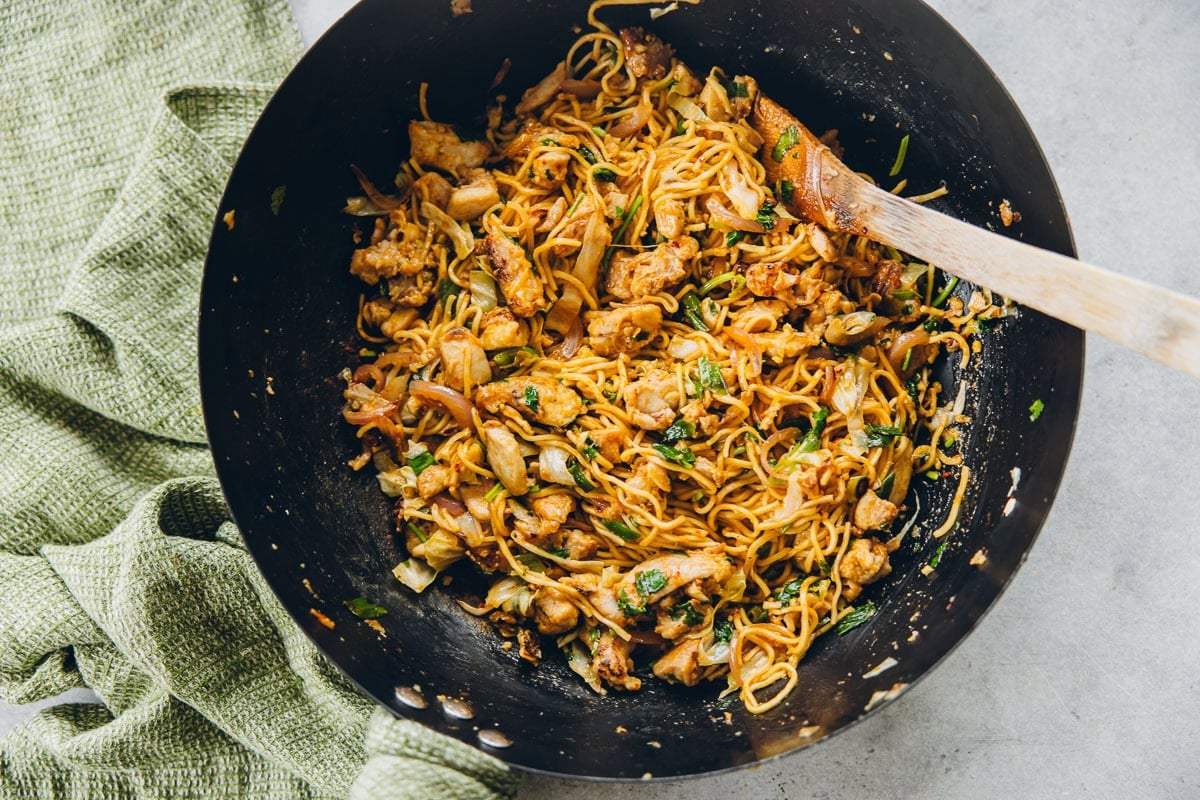
10. Add Schezwan sauce and stir-fry for a couple of minutes, tossing to coat everything evenly.
🍽️ Serving Suggestions and Storage
Serve these delicious Chicken Schezwan Noodles with more Indo-Chinese Dishes like
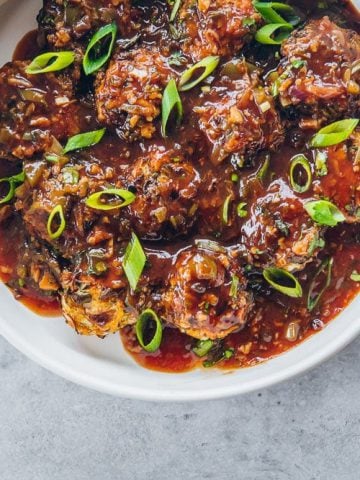
Tomato Egg Drop Soup and Veg Manchurian.
These Chicken Schezwan Noodles will stay fresh in an airtight container in the fridge for up to three days. They also freeze well and can be stored in the freezer in freezer-safe containers for up to a month. Simply reheat in the microwave and serve.
💛 More Indo-Chinese Recipes
Recipe
Hungry For More Recipes? Subscribe to my FREE weekly cooking newsletter. Check out Instagram, Facebook, and Tiktok to see everything I share! And if you love exploring cooking techniques, discovering new cookbooks and want access to my exclusive veg-forward recipes, join my Best-Selling Substack!
Ingredients
chicken
- 500 g boneless chicken thigh, diced into 2-cm pieces
- 1 egg, whisked
- ½ tsp red chilli flakes
- 2 tbsp soy sauce
- 2 tbsp cornstarch
stir-fry sauce
- 1 tbsp soy sauce
- 1 tbsp white vinegar
- 2 tbsp Sriracha
- 1 tbsp tomato ketchup
- 3 tsp raw sugar
- ¼ tsp white pepper
- ½ tsp red chilli flakes
noodles
- 280 g fresh chow mein noodles
- 2 tbsp oil
- 1 red onion, halved and sliced
- 1 cup shredded cabbage
- 4 spring onions, sliced (white and green)
- 4 garlic cloves, minced
- 1 teaspoon grated ginger
- ½ teaspoon MSG, (monosodum glutamate/ajino moto), optional
- ¼ cup coriander, chopped
Instructions
- Add chicken, egg, red chilli flakes and cornstarch to a large bowl and mix well.
- To make the stir fry sauce, add soy sauce, white vinegar, Sriracha, ketchup, sugar, white pepper and red chilli flakes to a bowl and mix well.
- Heat fresh noodles in a pot of boiling water as per the packet instructions. Drain and set aside.
- Heat one tablespoon oil in a large wok on high. When smoking, add marinated chicken. Stir-fry for 4-5 minutes, tossing constantly until chicken is seared and almost cooked through the middle. Remove and set aside.
- Add the remaining oil to the wok. Add onion and stir-fry for a minute until onion is glazed. Add cabbage, spring onion, garlic and ginger. Cook for 1-2 minutes until fragrant. Add cooked noodles, chicken and MSG if using. Add the stir fry sauce. Stir-fry for 2-3 minutes, tossing constantly until mixed well and heated through. Test to check if chicken is thoroughly cooked.
- Remove from heat, add coriander and mix well. Serve immediately.
Notes
- Chicken - Boneless, skinless chicken thigh works best in these Chicken Schezwan Noodles. You can use chicken breast fillets or tenderloins as a substitute.
- Noodles - Fresh chow mein noodles are perfect for this dish. Chow mein noodles are thinner than udon noodles and have a similar thickness to ramen or egg noodles. If using uncooked noodles, try plain Chinese instant noodles or thin egg noodles, which are available in Asian sections of supermarkets. Two 100g cakes would be the right amount for this recipe.
- Soy sauce - Use light soy sauce for this dish.
- Vinegar - White vinegar for the acidic tang. Indo-Chinese dishes often use white vinegar to add acidity. Do not substitute with rice wine vinegar as it changes the flavour profile.
- Herbs - Fresh coriander is a key ingredient of Indo-Chinese cuisine. Don't skip this herb for that true, authentic Indo-Chinese taste.
- Storage Suggestion - This will keep fresh in the fridge in an air-tight container for up to three days. It can be frozen for up to one month.






0 Comments